Citric Acid Uses in Food
Learn how citric acid is used as a food additive and preservative across food, beverages, cosmetics, pharma, and cleaning formulations.
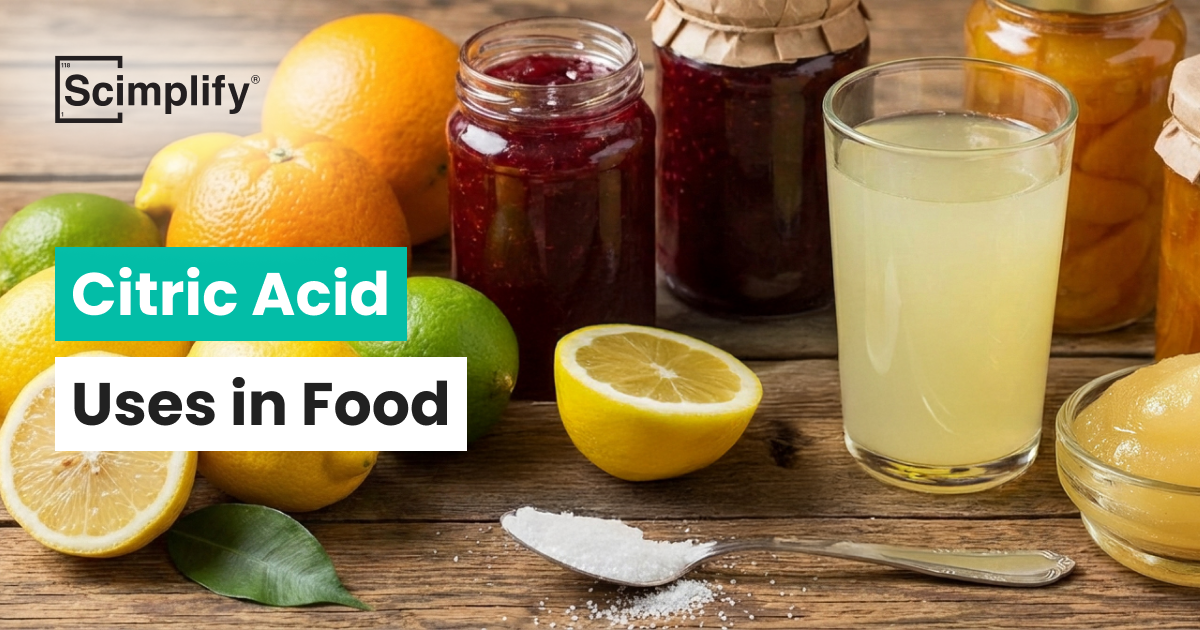
Citric acid is found in everything from soft drinks and jams to skincare products, cleaning formulations, and effervescent tablets. It adds tartness, improves stability, and supports preservation while remaining familiar and widely accepted. Although first isolated from lemon juice, most citric acid used today is produced through controlled microbial fermentation, allowing formulators access to a consistent, high-purity ingredient on an industrial scale.
Because of this versatility, citric acid as a food additive and citric acid as a food preservative have become essential concepts in modern formulation science.
What Is Citric Acid?
Citric acid is a weak organic acid with the molecular formula C₆H₈O₇. It is a naturally occurring compound and a key metabolite in the citric acid (Krebs) cycle, which is central to cellular energy production. In pure form, citric acid appears as a white crystalline solid with a strongly sour taste and high water solubility.
In formulations, citric acid is mainly used to:
- Adjust and stabilize pH
- Improve taste and sensory balance
- Bind metal ions through chelation
- Support preservation and antioxidant performance
These properties explain why citric acid as a food additive is used across beverages, processed foods, and nutraceutical products.
Request a Sample of Food-Grade Citric Acid!
Sources of Citric Acid
1.Natural Sources
Citric acid occurs naturally in citrus fruits such as lemons, limes, and oranges, as well as in berries and some vegetables. Early industrial production relied on extraction from citrus juice, but this method is now limited due to cost and seasonal variability.
2.Manufactured Citric Acid
Today, most citric acid is produced by fermenting carbohydrate feedstocks using Aspergillus niger. This fermentation route delivers consistent purity, controlled impurity levels, and a reliable year-round supply. Chemically, fermented citric acid is identical to naturally occurring citric acid.
How Citric Acid Works as a Preservative
Citric acid supports preservation through two primary mechanisms:
- pH reduction: Lowering pH creates an environment where many spoilage and pathogenic microorganisms cannot grow.
- Metal chelation: Binding metal ions slows oxidation, discoloration, and degradation reactions.
Because of these effects, citric acid as a food preservative is widely used in beverages, jams, canned foods, and sauces. It also improves the performance of other preservatives by keeping them in their most active form.
Typical food-use levels range from 0.05% to 0.5%, depending on product type and regulatory limits. Regulatory bodies such as the FDA and EFSA classify citric acid as GRAS when used according to good manufacturing practices.
Key Uses and Applications
1.Food and Beverage
Citric acid is one of the most common acidulants in food systems. Its roles include:
- Flavor enhancement through controlled tartness
- pH adjustment for safety and stability
- Support for microbial control and shelf-life extension
Common applications include soft drinks, juices, jams, jellies, confectionery, and ready-to-drink beverages. In these products, citric acid as a food additive contributes both functional and sensory benefits.
2.Cosmetics and Personal Care
In personal care formulations, citric acid acts as:
- A pH adjuster to maintain skin-compatible ranges
- A chelating agent to stabilize formulations
- A mild alpha-hydroxy acid for exfoliation in controlled concentrations
It is commonly used in shampoos, cleansers, serums, toothpaste, and mouthwash.
3.Household and Industrial Cleaning
Citric acid is valued in cleaning formulations because it:
- Dissolves limescale and mineral deposits
- Chelates calcium, magnesium, and iron
- Offers a biodegradable alternative to strong mineral acids
These properties make it suitable for descalers, dishwasher detergents, and surface cleaners.
4.Pharmaceuticals and Supplements
In pharmaceutical formulations, citric acid supports:
- pH control and stability in syrups and suspensions
- Antioxidant protection of active ingredients
- Effervescence, when combined with carbonates
In supplements, it improves taste, dissolution behavior, and formulation stability.
Benefits of Using Citric Acid
Citric acid offers several formulation advantages:
- High water solubility and easy dosing
- Broad regulatory acceptance
- Compatibility with other preservatives
- Biodegradability and low environmental impact
These benefits explain why citric acid as a food preservative continues to be favored over harsher or less familiar alternatives.
Safety and Regulatory Considerations
Citric acid is considered safe at typical exposure levels. However:
- Frequent exposure to acidic beverages may contribute to dental enamel erosion
- High cosmetic concentrations can cause irritation in sensitive skin
Recommended practices include controlled dosing, proper labeling, and compliance with regional cosmetic and food regulations.
How Brands Use Citric Acid Effectively
Effective formulation strategies include:
- Targeting appropriate pH windows for each product category
- Pairing citric acid with complementary preservatives or buffers
- Balancing sensory impact with stability requirements
Because it is familiar to consumers, products using citric acid as a food additive are often perceived as cleaner-label and more acceptable.
Industries That Depend on Citric Acid
Major users include:
- Food and beverage manufacturers
- Cosmetics and personal care brands
- Home-care and cleaning product companies
- Pharmaceutical and nutraceutical producers
Across these sectors, citric acid as a food preservative plays a central role in safety, stability, and quality control.
Conclusion
Citric acid combines acidity, chelation, and biodegradability in a single ingredient. This balance makes it one of the most widely used functional materials in modern formulation science, supporting taste, preservation, and product performance across industries.
At Scimplify, we supply high-purity citric acid produced through controlled fermentation, supported by strong quality systems and regulatory documentation. Our focus is on consistency, compliance, and reliable supply for food, pharmaceutical, and industrial applications. By combining technical expertise with scalable manufacturing, we help partners integrate citric acid into formulations that meet global performance and regulatory standards.