Sodium Benzoate vs Benzoic Acid: Differences, Uses & Safety Tips
Learn how sodium benzoate and benzoic acid differ in solubility, food uses, and safety. Understand where they’re used, regulatory limits, and simple tips for safe preservation
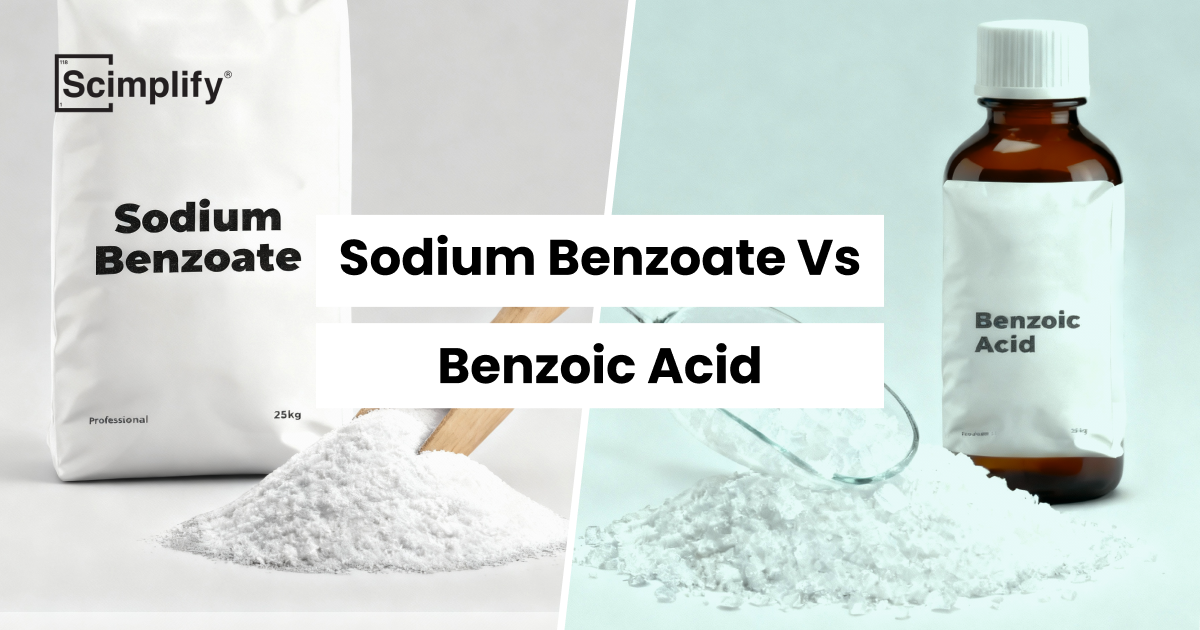
When comparing, it helps to understand how each works in food preservation. Benzoic acid and benzoates are among the oldest and most widely used preservatives. They both stop the growth of bacteria, yeast, and mold, but differ in their solubility and how they are used in real food applications. Knowing these differences makes it easier to read labels and understand why certain preservatives are chosen.
What is the difference between benzoic acid and benzoates?
Benzoic acid is the natural form found in foods like cranberries, plums, and cinnamon. Benzoates (such as sodium benzoate) are created by combining benzoic acid with a base, making them far more water-soluble.
Benzoic acid does not dissolve well in water, so it is rarely used in beverages or liquid foods. Benzoates dissolve quickly, spread evenly, and work more effectively - which is why they are preferred in manufacturing.
Both work best in acidic environments (below pH 4.5), where microbial growth slows down. The major advantage of benzoates is their convenience: they are easier to measure, mix, and apply during processing.
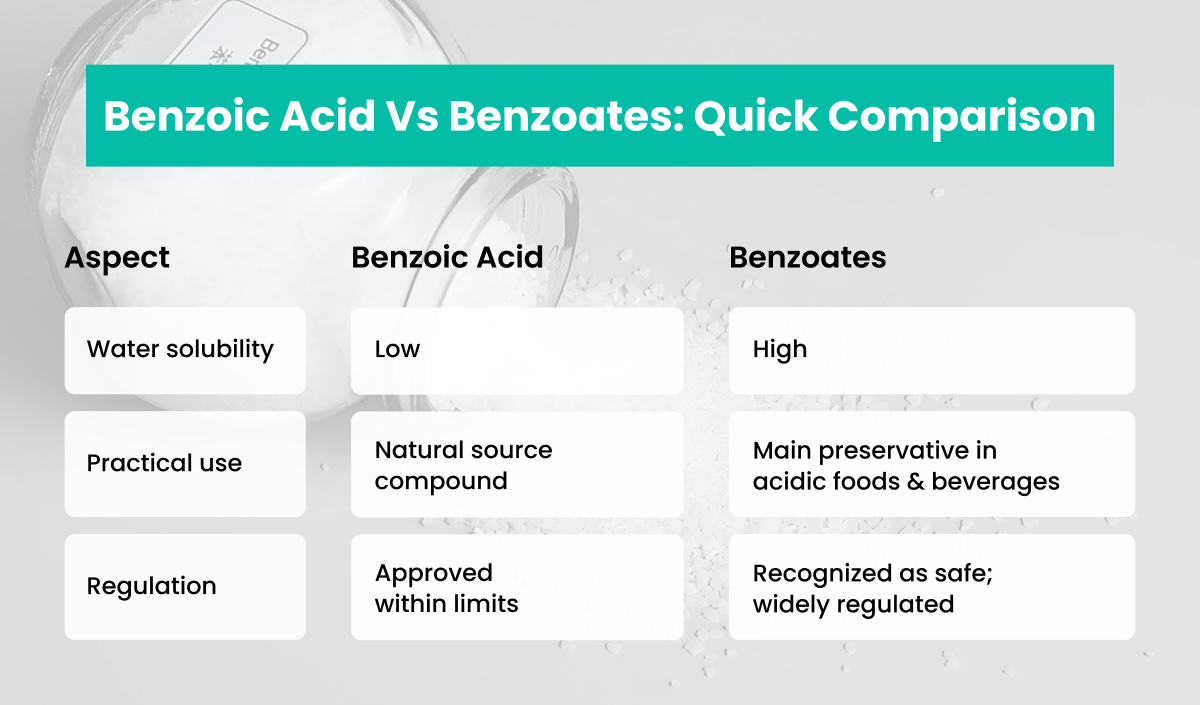
This side-by-side view helps clarify the Benzoate vs Benzoic acid differences for practical food use.
Which is safer for food?
Both benzoic acid and benzoates are considered safe when used within approved limits. Authorities like the FDA and EFSA have evaluated them extensively. Sodium benzoate is the most commonly used form because it dissolves well and offers consistent preservative performance.
A small point to note: benzoates can react with vitamin C under specific conditions to form trace levels of benzene. However, global standards and routine industry testing ensure these levels remain far below safety thresholds.
Need pure quality Sodium Benzoate? Request a Sample!
How are they used in foods?
Sodium benzoate is widely added to:
- Soft drinks and fruit beverages
- Pickles and vinegar-based foods
- Jams, jellies, and fruit spreads
- Sauces and ready-to-eat items
It prevents yeast, mold, and bacteria from growing, especially in acidic foods.
Benzoic acid, although naturally present in some fruits and spices, is less commonly used in manufacturing due to its low solubility.
Simple Safety Tips
- Follow regulatory limits (usually up to 0.1 percent of the food products)
- Use preservatives as part of an overall food-safety plan
- Label ingredients clearly for consumers
- Store foods away from heat and light for the best quality
Conclusion
Understanding Benzoate vs Benzoic acid helps explain why each is used the way it is. Both have been trusted for decades and, when used correctly, are safe and effective preservatives. They help keep foods fresh, stable, and protected from harmful microbes. If you see “sodium benzoate” on a label, it simply indicates the product uses a well-studied, tightly regulated ingredient to maintain safety and shelf life.

