Xanthan Gum Substitutes
Explore the best xanthan gum substitutes for industrial, food, cosmetic, and pharma formulations. Compare leading alternatives to ensure performance, stability, and supply continuity.
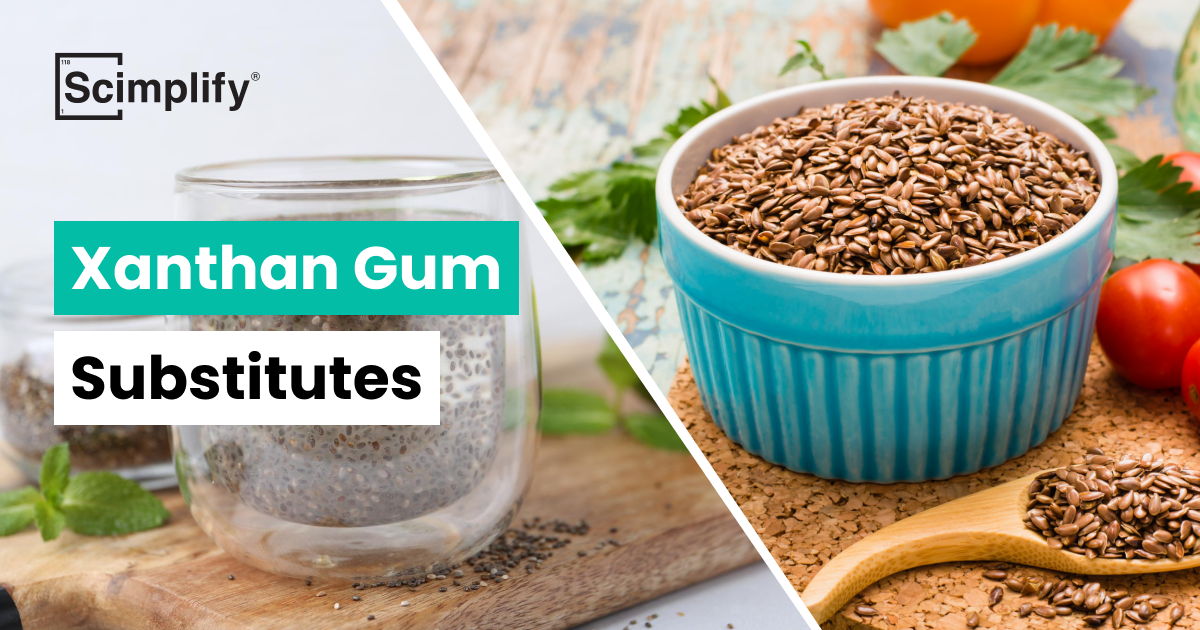
Xanthan gum is widely used as a thickener, binder, and stabilizer in food, cosmetic, pharmaceutical, and industrial applications. However, recent years have seen an increased interest in xanthan gum replacements due to supply limitations, dietary preferences, and clean-label trends. This blog outlines the top substitutes and alternatives for xanthan gum that help maintain product quality and texture.
Common Xanthan Gum Substitutes
1. Guar Gum
Guar gum is one of the most common and cost-effective xanthan gum substitutes, derived from guar beans. It offers similar thickening and binding properties and is especially useful in gluten-free baking, sauces, and dressings.
Recommended ratio: 3 parts guar gum for every 2 parts xanthan gum.
2. Chia Seeds Gel
When soaked in water, chia seeds form a natural gel that acts as a strong xanthan gum alternative for both thickening and binding. They also provide omega-3 fatty acids and dietary fiber, making them ideal for vegan and gluten-free applications.
3. Ground Flaxseeds
Like chia, flaxseeds create a gel-like texture when hydrated. This not only makes them a reliable replacement for xanthan gum in baking but also adds fiber and healthy fats to the formulation.
4. Psyllium Husk
Rich in soluble fiber, psyllium husk forms a gel that improves moisture retention and elasticity in gluten-free baked goods. It is valued as a strong xanthan gum alternative in applications where structure and binding are needed.
5. Tapioca Starch
Tapioca starch is a popular substitute for xanthan gum in baked goods and thickened sauces, especially in gluten-free cooking. It provides a smooth mouthfeel and a slightly chewy texture.
6. Arrowroot Powder
Arrowroot powder is an excellent thickener and emulsifier for soups, sauces, and desserts. Its neutral taste and smooth finish make it an effective xanthan gum alternative, particularly for clean-label products.
7. Locust Bean Gum
Extracted from carob seeds, locust bean gum is commonly used in dairy applications like ice creams. Although often paired with other gums, it can act as a standalone xanthan gum substitute depending on the formulation.
8. Gelatin and Agar Agar
For desserts and gel-based applications, gelatin and agar agar provide firmness and stability. Agar agar is the vegan-friendly option, while gelatin is animal-derived.
Ready to try Xanthan Gum in your formulation? Get your sample today.
Why Consider a Xanthan Gum Replacement?
- Cost Efficiency: Options such as guar gum are often more economical.
- Dietary Preferences: Many consumers prefer natural, vegan, or allergen-friendly ingredients.
- Supply Stability: Using multiple xanthan gum substitutes helps reduce dependency on fermentation-based supply chains.
- Functional Flexibility: Each xanthan gum alternative offers distinct viscosity, texture, and gel strength suited to specific uses.
Conclusion
Choosing the right xanthan gum alternative depends on your recipe and performance needs. Guar gum offers cost-effective thickening, while chia and flaxseed provide nutritional benefits. Psyllium husk enhances elasticity, and starches like tapioca or arrowroot offer smooth, consistent thickening. By understanding the strengths of these xanthan gum substitutes, formulators can maintain product quality while meeting consumer expectations, functional requirements, and supply demands.