Xanthan Gum Uses and Benefits
Learn what xanthan gum is used for across food, cosmetics, pharma, and industrial applications. Explore its benefits as a thickener, stabilizer, and emulsifier.
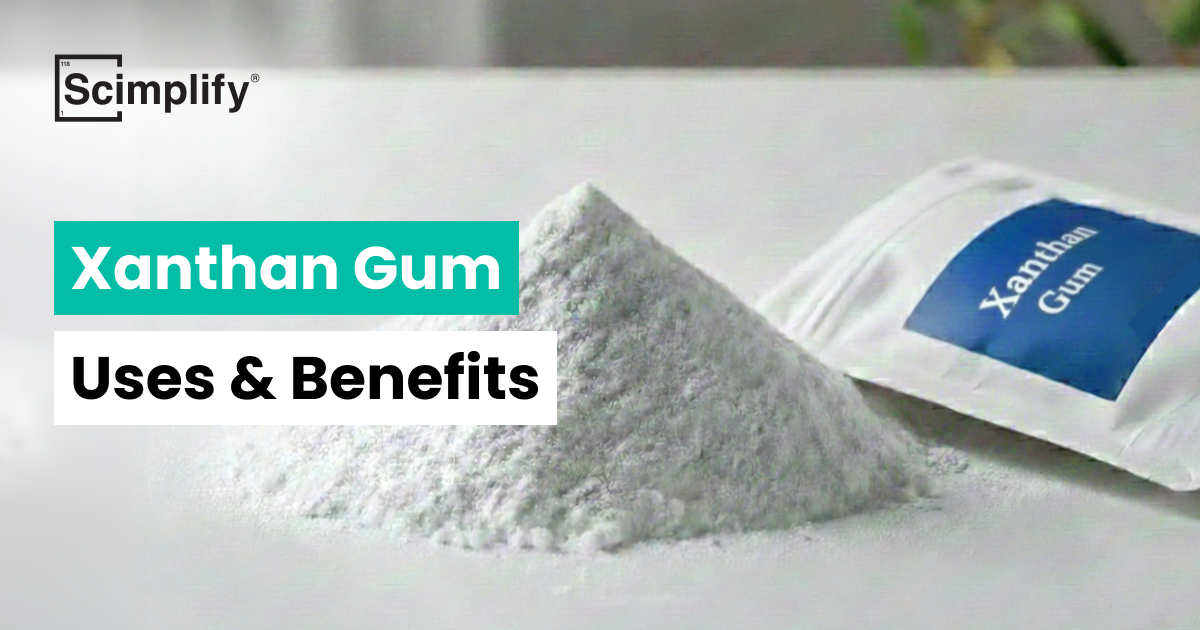
Xanthan gum is a natural polysaccharide with clear functionality features that make it readily valued in various industries. When discussing xanthan gum uses, it is important to understand the industries it is used in, such as food, cosmetics, pharmaceuticals, and industrial production, due to its thickening, stabilizing, and emulsifying capabilities.
What Xanthan Gum Is Used For?
Xanthan gum serves multiple functions depending on the industry, and these functions explain what xanthan gum is used for in different product categories.
1.Thickening Agent:
• Increases viscosity even at low concentrations
• Helps achieve desired texture and consistency
2.Stabilizer:
• Keeps particles evenly dispersed
• Prevents separation in products like beverages and dressing
3.Emulsifier:
• Helps oil and water stay mixed
• Creates smooth, homogenous emulsions
4.Suspension Aid:
• Keeps solid particles suspended uniformly
• Important for pharmaceutical syrups and cosmetic gels
5.Rheology Modifier:
• Controls how a product flows under different mixing or shear conditions
• Improves spreadability, handling, and mouthfeel
Enhance Your Formulation Performance - Request a Xanthan Gum Sample!
Xanthan Gum Benefits
The xanthan gum benefits align closely with its functions, including:
- Versatility: Performs reliably in a broad temperature and pH range, from freezing conditions to acidic and alkaline environments.
- Cost-Effectiveness: Highly potent, with thickening power effective at low dosages, reducing overall formulation costs.
- Compatibility: Works synergistically with other gums (guar, locust bean, carrageenan), enhancing stability and texture.
- Safety: Recognized as safe by regulatory bodies like the FDA and EFSA; vegan, gluten-free, and allergen-friendly.
- Shelf-Life Extension: Improves product stability by preventing ingredient separation and water migration.
- Clean Label Appeal: Supports additive reduction in modern, natural, and gluten-free formulations.
Xanthan Gum Uses in Food
In food products, xanthan gum is used in various applications, making it a crucial ingredient for texture and stability:
- Beverages: Suspends pulp and particles in juices and dairy drinks without altering flavor.
- Salad Dressings and Sauces: Prevents oil-water separation, ensuring smooth pourability and consistency.
- Bakery: Enhances moisture retention and softness in gluten-free and traditional baked goods.
- Dairy Products: Stabilizes ice cream, yogurt, and cheese to prevent water separation (syneresis) and improve mouthfeel.
- Confectionery and Jellies: Maintains uniform texture during processing and storage.
- Meat and Poultry: Helps retain shape and moisture in sausages and processed meats.
Conclusion
Xanthan gum is a highly multifunctional product with functional special characteristics. Thickening, suspension, shear-thinning, and stability are the main properties that enable the xanthan gum to be useful in food, cosmetics, pharmaceuticals, and other industries. Notably, xanthan gum used in food provides an advantage in the sense that any product that uses it can be identified as having a superior texture, stability, and shelf life.
With strong xanthan gum benefits and dependable performance, xanthan gum remains one of the best ingredients for effective, stable, and clean-label formulations. Xanthan gum uses demonstrate that it continues to meet industry needs amid changing trends, owing to its reliability and consistency.